
The Winnebago Bellwether

I’ve read (here and elsewhere) that economists have collectively failed to accurately predict a recession in the past 40 years.
So where should we turn to peer into an economic crystal ball? Perhaps the nimble Winnebago. Yes, seriously:

Winnebago Industries Inc., Thor Industries Inc. and other U.S. recreational-vehicle makers will probably say shipments fell in 2007 for the first time in six years, a sign the U.S. economy may be headed for a recession.
For the past three decades, deliveries of motor homes and travel trailers have dropped before each decline in the U.S. economy, giving the $15 billion industry a reputation as a bellwether. As the U.S. housing slump worsens, gasoline prices rise and consumer confidence wanes, RV sales are forecast to slide this year and next.

I wonder how much gas prices are a factor here. It seems to me that if you are a baby boomer who can afford to shell out tens or hundreds of thousands of dollars for an RV, a $1 increase for a gallon of gas might not be a deal breaker. But that’s just hypothetical thinking. I suspect anxiety generated by this trend is a bigger culprit.
Eliminating Unwanted Catalogs

Are you tired of hauling a stack of junk from your mailbox?
You might want to check out a website called Catalog Choice. On Friday All Things Considered had a segment featuring the site, which purportedly enables users to opt out of receiving unwanted catalogs.
Catalog Choice is endorsed by several environmental groups, for good reason: America consumes 19 billion catalogs a year, at a cost of 53 million trees. That’s just the environmental impact from making the paper; it doesn’t include the energy needed to print, ship, and then disposal of all those catalogs. A billion here and a billion there and pretty soon you’re talking some real waste.
According to the website, several corporations have a formed a relationship with Catalog Choice–not just for the environmental benefits, but also as a way to save money. It costs an average of 80 cents to ship a catalog. If you’re not reaching interested customers, that’s just money out the window.
I know my home address continues to get unwanted promotional mailings (not necessarily catalogs) sent to people who lived here more than 15 years ago. One would think companies would try to keep their mailing lists somewhat current. But obviously some of them do a bad job. Perhaps a website such as Catalog Choice will help.

Illich On Efficient Transportation

An excerpt from philosopher Ivan Illich’s “Energy and Equity”:

Man on a bicycle can go three or four times faster than the pedestrian, but uses five times less energy in the process. He carries one gram of his weight over a kilometer of flat road at an expense of only 0.15 calories. The bicycle is the perfect transducer to match man’s metabolic energy to the impedance of locomotion. Equipped with this tool, man outstrips the efficiency of not only all machines but all other animals as well.

The full text is here.

Fox News: Speaker Pelosi Responsible For High Gas Prices

Heh. This is funny even by Fox News standards.
Apparently, the network featured a caption which read:

“Gas Prices up 39% Since Dems Pick Nancy Pelosi”

(Screen shot here.)
Good, this provides me another opportunity to run this:

I wonder if–being “fair and balanced”–FNC has run a similar graphic which read:

“Gas Prices UP 114% Since Bush Entered White House”

I’m guessing the hardworking FNC research department has never got around to doing that kind of heavy-duty homework.
On a more serious note, I wouldn’t be surprised if energy becomes a an even more important 2008 election issue than we’re seeing now. Prices could be higher in a year, helping push the economy into a recession.
Unfortunately, there aren’t many viable short-term remedies to this problem. And the steps we should be taking aren’t getting much play by the candidates. America’s political leadership is way behind the curve on energy.

God Created Plenty Of Oil For Us To Burn

I was listening to comedian Rush Limbaugh again on Tuesday. He was advancing his radical consumerism viewpoint by arguing that we’ve got an endless supply of oil to burn. No need to worry about fossil fuels or global warming–buy a big SUV and be happy.
First he pointed to a story on a United Arab Emirates airliner ordering more airplanes as proof that there’s plenty of oil. Why would an Arab country be ordering more aircraft if we we’re running out of oil?
An interesting argument, but one you can just as easily turn on its head. Perhaps the company realizes that with tight oil supplies, it will be uniquely positioned to turn a profit if it has better local access to fuel than international competitors. Moreover, high energy prices would be a boon to Arab economies (at least in the short term), generating more passenger growth, and account for the “highly favourable home and regional market dynamics” rationale cited by the airline.
Limbaugh went on to say this:

Probably, you know, the conventional wisdom, “We’re running out of oil supplies! Global warming,” blah, blah, blah, blah, blah. That stuff is here for a reason. It’s part of creation. God intended it to be used as we’re using it, and we’re using it, and there’s tons of it out there.

Putting aside the question of whether or not God created the oil for us to use, how does that claim address scarcity? God also created water and food, and we’ve got plenty of examples of societies running short of those resources. Just because God may have created something does mean we have infinite supply to consume. God has never guaranteed $3/gallon gasoline. Nature has its limits, whether Limbaugh wants to recognize them or not.

Name-Letter Effect

This is odd:

Psychologists in marketing at Yale and the University of California, San Diego studying the unconscious influence of names say a preference for our own names and initials — the “name-letter effect” — can have some negative consequences.
Students whose names begin with C or D get lower grades than those whose names begin with A or B; major league baseball players whose first or last names began with K (the strikeout-signifying letter) are significantly more likely to strike out, according to the report published in the December issue of Psychological Science.
. . .
The researchers say the effect is definitely more than coincidence but is small nevertheless.

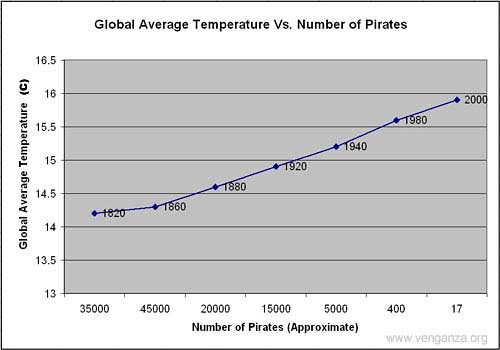
Despite the large sample size in this research, I’m still skeptical, viewing it kind of like this:

Then again, I don’t claim to understand human psychology.